
Architecture
-

AI Coding Tools Are Only Exposing Your Weak Software Engineering Discipline
AI Coding is the end of pretending your engineering process is mature. The pitch versus the reality Every vendor demo looks the same. A developer types a vague instruction. The AI returns clean, working code in seconds. The crowd applauds. Another slide promises “10x productivity.” What the slide does not show: the codebase those snippets…
-

Why Slow Data Still Makes Businesses Rely on Gut Feeling
We have spent the last decade building structured, data-driven systems. Our operational environments are now filled with automation, dashboards, and real-time alerts. In logistics, finance, and IT, decisions are increasingly made by algorithms or are at least heavily supported by them. And yet, when it comes to day-to-day tactical decisions, we still fall back on…
-

The “Dumber” the Intelligent Edge, the Better: Opportunities and Risks in Edge Computing
Edge computing is rapidly gaining popularity. That is hardly surprising. There are countless situations in which you want to perform a calculation, but for one reason or another (latency, cost or security) you cannot rely on the cloud. There is a great deal of attention for fast applications such as image recognition. Yet in practice,…
-
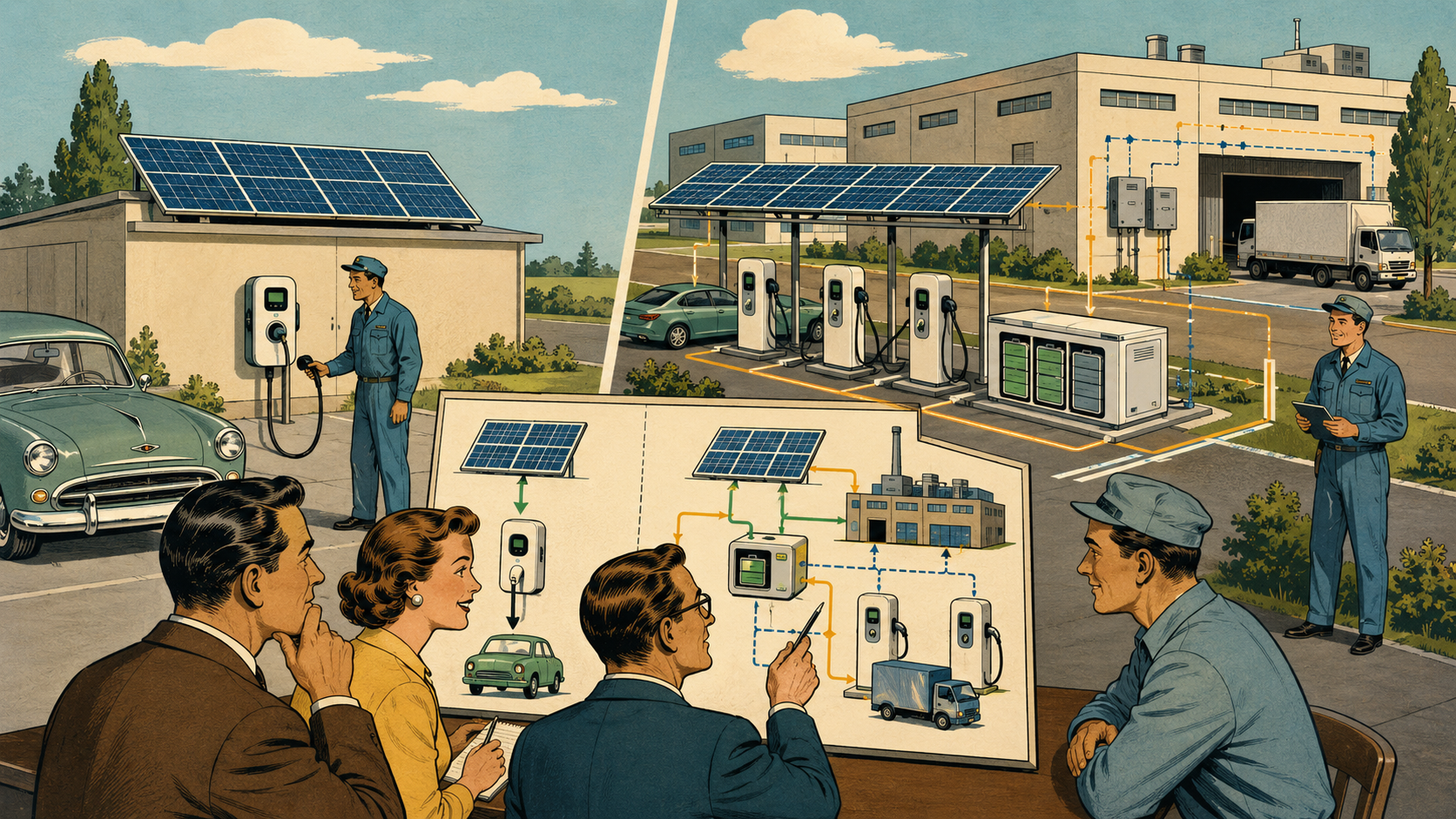
Standard vs Custom EMS: How to Choose the Right Energy Management System
The Smartest Choice Depends on One Question You Probably Haven’t Asked Every company with solar panels, a charging hub, or a battery wants an energy management system. Fewer companies stop to ask whether they need a standard EMS or a custom one. That single question decides whether your investment pays off or sits half-used within…
-

Taming the IoT Spaghetti: Unraveling the Complexity of IoT Architecture with Pasta Metaphors
With the ever-expanding realm of the Internet of Things (IoT), organizations are increasingly embracing interconnected devices to gather and exchange data. These systems often start with one use case and one type of sensor. Adding more sensors, protocols, and use cases, the IoT systems gradually evolve towards a more complicated system, adding a new string…
-

Do you have a digital twin or an imaginary friend?
n the realm of interconnected devices and the Internet of Things (IoT), the term “digital twin” often finds its way into discussions. You might have come across this concept in your favorite podcast, a blog post, or the latest cutting-edge technology update. It’s apparent from the various sources you’ve encountered that a digital twin holds…
-

Legacy IT and Technical Debt: What Should We Do With Our Cauliflower Automation?
If, like me, you have been working in IT for a while, you may recognise this: An organisation has a system that has been built a while ago and is up and running. However, after a while, the requirements change. Users discover that they want something extra, or that a specific piece of functionality needs…
-

Data Platforms and Data Lakes: Data Mesh puts Business Back in the Lead
The current method of providing data services using data lakes often leads to highly specialized, siloed teams of data engineers and business analysts. The result is complexity, limited flexibility, and a long time-to-market for data products. This can be prevented by allowing decentralized DevOps teams to develop business-driven functionality on top of central data services.…
-

Data is the new Uranium
Inspired by the tweet of Filippo Valsorda I want to debate the analogy “Data is the new oil”. I think this analogy is incorrect since data has a lot of properties that are not similar to oil. Below, I will explain why I think “Data is the new Uranium” is a more accurate analogy. Data is very…