
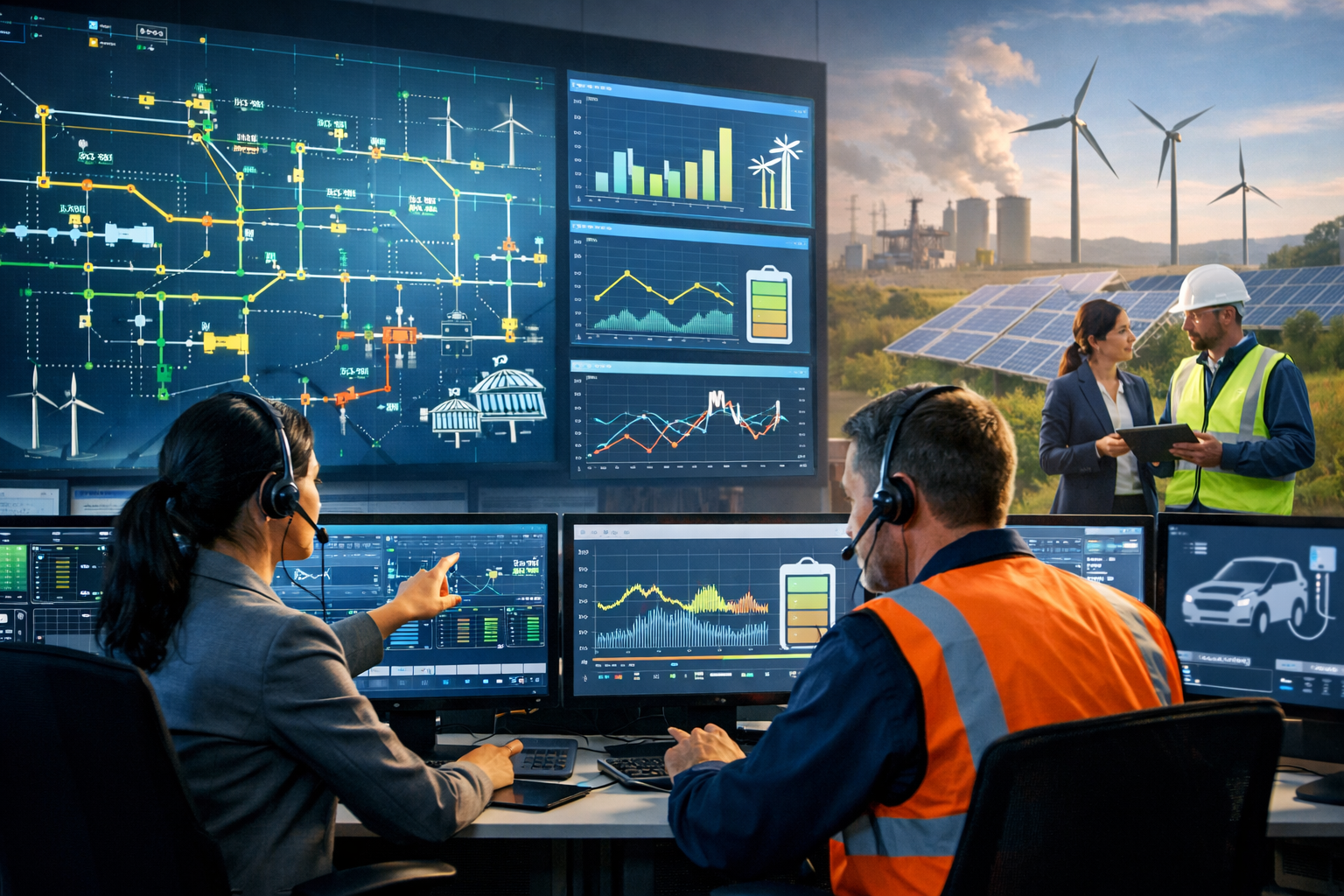
The energy transition is one of the defining infrastructure challenges of our time. At its core lies a deceptively simple requirement: knowing what is happening on the grid at every moment. Yet despite widespread recognition of this need, many energy systems today still operate on fixed settings and periodic data read-outs, driven by billing cycles rather than operational intelligence.
That gap between where we are and where we need to be is significant. Real-time data is not a feature of tomorrow’s energy system. It is a prerequisite for it. This article sets out six reasons why.
Balancing supply in a more complex grid
Grid management has always been a balancing act. As the energy mix becomes more diverse and distributed, the margin for error narrows. Real-time data provides operators with the granular, moment-to-moment visibility needed to balance supply and demand effectively, ensuring an efficient mix of renewable and conventional sources without resorting to guesswork. Without it, grid management becomes reactive rather than anticipatory.
Managing the variability of renewable energy
The intermittent nature of wind and solar power is well understood. What is less often acknowledged is that variability alone is not the problem. Unmanaged variability is. Real-time data enables grid operators and aggregators to anticipate and respond to fluctuations in generation, smoothing the integration of renewables into the broader system. Without current, accurate data, every forecast is approximate and every intervention is delayed.
Enabling informed decisions for consumers and prosumers
The emergence of dynamic tariff structures changes the economics of energy consumption fundamentally. For households and businesses operating in a flex-tariff environment, whether managing solar installations, home batteries, or EV charging, the ability to track production and consumption in real time is no longer optional. Real-time data gives consumers the visibility to make active, economically rational choices about when to consume, store, or feed energy back into the grid. Without it, the promise of demand-side flexibility remains largely theoretical.
Optimising energy storage
Energy storage, whether short-term in batteries or long-term in hydrogen, is central to the resilience of the future energy system. But storage assets can only be dispatched effectively when operators know the current state of the grid. Real-time data enables storage systems to be charged and discharged at precisely the right moments, maximising both technical performance and economic value. Without this intelligence, storage risks becoming an underutilised and costly resource.
Accelerating innovation
The development of new energy technologies, from smart inverters to AI-driven grid management platforms, depends on the availability of high-quality, timely data. Real-time operational data provides both the testing ground and the training material for next-generation solutions. It drives the feedback loops that make systems smarter over time. Organisations that invest in real-time data infrastructure today are building the foundation for the innovations of the next decade.
Strengthening grid resilience and reliability
A reliable energy system requires the ability to detect anomalies and respond to disruptions quickly, at the national, regional, and neighbourhood level. Real-time data is what makes that speed of response possible. It allows operators to monitor grid health continuously, isolate faults rapidly, and maintain service quality under stress. As grid complexity increases with the addition of distributed generation, electric vehicles, and new loads, the operational demands on monitoring systems will only intensify.
Conclusion
Energy systems have historically been relatively static infrastructure. The integration of distributed renewable generation changes fundamentally, introducing variability and complexity at every level of the grid. Real-time data is not simply a technological upgrade. It is the operational foundation that makes the energy transition manageable. The question for organisations in the energy sector is no longer whether to invest in real-time data capabilities, but how quickly they can build them.